
William Stephens, new chair of Stanford Tourism, brings heavyweight clout to the position.
After being away from Stanford for seven months, a number of people wrote – almost simultaneously – to say how much things had changed there. There was now a spirit of ‘Team Stanford’. CapeInfo had already noticed this in social media where the little village was making waves, punching way above its weight.
The changes were predictable, but far exceeded what we had expected. Buoyed by its Village of the Year award, Stanfordians started looking at how to do things better… and, in the process, a can of worms was opened. Below the veneer, there was some seething dissatisfaction among tourism stakeholders.
Rather than just let things follow their course, a few people got together to plan what would be best for Stanford. And they pursued that plan.
Between 2006 and 2013, Stanford’s tourism organisation had been served by only two chairpeople, who’d played musical chairs… or kept the seat warm for the other. There was criticism of favouritism and undue benefits to a small clique.
In planning for new blood to challenge the status quo and quell this dissatisfaction, at the AGM a potential chairperson with no vested interests in the town was sought. And a proposal for far greater participation through special-interest sub-committees was made.
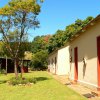
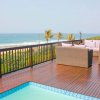
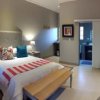
They were lucky! A suitable chairperson had made the village his home. William Stephens had no business interests in the town, but he used it as a base to oversee his De Hoop Collection in the De Hoop Nature Reserve. This was the first public-private enterprise for Cape Nature and the Western Cape , unlocking value for this astounding UNESCO World Heritage Site. The De Hoop Collection is a range of accommodation and activity options in the reserve which caters for all pockets.
His previous ventures are routed in tourism, the best-known being his involvement in the development of the 75,000 hectare Madikwe Reserve in the North West province, where a total of approximately 33 lodges have been built.
Prior to the Reserve’s establishment, the whole region consisted of degraded cattle farms that had been expropriated from white farmers,” William says. “Under apartheid, the farms had, in turn, displaced whole communities of tribal groups from their traditional homelands. Most of the wildlife found in the region had long since been hunted out and the whole area was an economic backwater.” So in this case, “conservation” meant taking the land back to what it was, to give it economic value. Tourism offered the best way to do this.
One of South Africa’s largest game reserves, Madikwe has the distinction of being one of the few game reserves in the world to be proclaimed purely on the grounds of being the most appropriate and sustainable land use for an area. The approach towards conservation at Madikwe put the needs of people before that of wildlife and conservation – if conservation is to succeed, then local communities and individuals must benefit significantly from wildlife conservation and related activities.
It was because of Madikwe that Cape Nature awarded William’s company the contract to manage tourism-related facilities at the gem in its portfolio – the De Hoop Nature Reserve.
What William brought to Stanford Tourism as its new chairperson is a wealth of experience – and established contacts and relationships.
Getting all local stakeholders involved and participating was an early goal. But the call is still out on the success of that. While talk in the village and on social media is hugely positive about the new tourism committee’s directions, the process of participation hasn’t been without pitfalls. Small town businesses are not always as professional as one might expect, and there’s always the expectation that someone else must do the work. Small towns are full of chirping from the sidelines!
Sorting out the village’s website (which still ran on long-discontinued Joomla 1.5 and a bone of contention in the community for its content) was a smoother process. William’s relationship with Smart Octopus saw that turned around quickly. (We’d like to discuss these changes in a future blog post.)
Smart Octopus also drove a social media campaign on Twitter – including co-developing #DiscoverOverberg – which has drawn a large following and promoted the wider Overberg as a destination, although some believe it is more of a mutual admiration society than a tool to reach potential travellers. But it all contributes to the buzz around the area, and it’s a very cost-effective way of doing that. (We hope to discuss this with Smart Octopus for another future blog post.)
William and his committee have also encouraged locals to get more buzz going through organising more events, and Stanford Tourism has itself tackled two events as fund-raisers in recent months.
He is keen to start getting more feedback from visitors to the village and is looking at ways of introducing this onto Stanford Tourism’s website.
During the short tenure of the new committee, three of the village’s restaurants have closed down. One can argue that the operators were just not up to the challenge but it does emphasize the need for towns to start thinking in the same way that regional centres do, when they vet operators for their abilities and resources. Running a restaurant (or any other business) in a small town is an attractive dream, but it’s also a risky business! Attracting really good operators is made much more difficult by Overstrand municipality’s town planning requirements. (And here, CapeInfo will be comparing the differing approaches of Overstrand and Stellenbosch.) William’s view is that “sometimes things need to break before you can fix them.” He is actively looking at how best to fix this challenge.
Another remaining challenge is to introduce a “feelgood” attitude into wider public perceptions of Stanford. “Feelgood” places are respected and admired, and people are keen to return there. But Stanford is still a racially-divided town – although there many initiatives which aim to bridge those divides. This challenge will only be successfully addressed when Tourism, Ratepayers, Conservation and everybody else starts working as a team.